The Age of Agade by Benjamin R. Foster
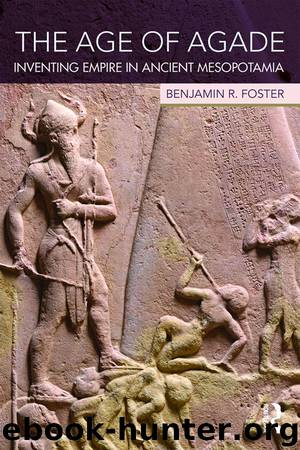
Author:Benjamin R. Foster [Benjamin R. Foster]
Language: eng
Format: epub
ISBN: 9781317415503
Publisher: Routledge
10
Akkadian human values
1. Identity
Self-definition, reflection, and reminiscence are not to be found in the extant Akkadian written tradition. The Akkadian sense of self, that is, an awareness of unique identity, and the Akkadian individual, as a self-sufficient organism, are thus difficult to apprehend. It is possible, nevertheless, to gain some understanding of the Akkadian person as a legal, social, and moral being from surviving documents, as well as from later literature.1
There were several modes of expressing identity (Chapter 2 part 2). Inferiors identified themselves by their personal dependency on someone else, such as “he of …,”2 whereas great dignitaries, including Sargon, were identified only by their given name, with no other qualifier, not even parentage.3 To convey legal and social status, a document might note a person’s citizenship in a given community, or use general terms, dumu-gir “free citizen”4 or mar Akkade “Akkadian.” The latter, originally a linguistic or ethnic term, in the Akkadian period came to refer to a dependent on the royal family, without regard to native language, place of birth, or family background.5
The proliferation during the Akkadian period of sculpture intended to preserve an individuated image of a notable or ruler, often inscribed with his name, is good evidence for a sense of personhood and a yearning to perpetuate it in some form even after death (Chapter 9 part 1).6 Likewise, the presence, in mostly single burials, of non-standardized grave goods, notably professional tools and personal objects of the deceased, points to a feeling for individual identity, as does the increase in the number of cylinder seals and other effects inscribed with the names of the owners (Chapter 9 part 3).
The Akkadian idea of what defined a human being can be gleaned from later sources. People, unlike animals, cut and groomed their hair, anointed and decorated their bodies, wore woven garments rather than natural fur or animal skins, drank fermented beverages rather than water, and acted as social beings by upholding and defending the interests of the group to which they belonged.7 The last is invoked in Akkadian names that refer to the family or clan as protection and support (Chapter 6 part 1).
The Akkadian elite cultivated traits of their class and individuality in their self-presentation and way of life. Unlike the majority of the population, they were expensively dressed, used cosmetics, and wore jewelry on the head, neck, chest, arms, wrists, fingers, and toes.8 Their cosmetics included kohl, henna, and a paste made from hematite.9 They ate a varied diet and drank several kinds of good beer and wine. As a sign of their high status, they feasted to enjoy the conviviality and pleasures of the table and to reward their subordinates, while reminding them of their dependency.10 They attended school, where they received sufficient education to read and write in both Sumerian and Akkadian.11 Their personal names invoked wealth and, in later times, Naram-Sin was proverbial for his riches.12 They expected to be obeyed by their inferiors; the rhetoric of men in authority was forceful and assertive.
Download
This site does not store any files on its server. We only index and link to content provided by other sites. Please contact the content providers to delete copyright contents if any and email us, we'll remove relevant links or contents immediately.
| Africa | Americas |
| Arctic & Antarctica | Asia |
| Australia & Oceania | Europe |
| Middle East | Russia |
| United States | World |
| Ancient Civilizations | Military |
| Historical Study & Educational Resources |
The Daily Stoic by Holiday Ryan & Hanselman Stephen(3330)
The Fate of Rome: Climate, Disease, and the End of an Empire (The Princeton History of the Ancient World) by Kyle Harper(3071)
People of the Earth: An Introduction to World Prehistory by Dr. Brian Fagan & Nadia Durrani(2743)
Ancient Worlds by Michael Scott(2694)
Babylon's Ark by Lawrence Anthony(2688)
The Daily Stoic by Ryan Holiday & Stephen Hanselman(2588)
Foreign Devils on the Silk Road: The Search for the Lost Treasures of Central Asia by Peter Hopkirk(2473)
India's Ancient Past by R.S. Sharma(2464)
MOSES THE EGYPTIAN by Jan Assmann(2425)
The Complete Dead Sea Scrolls in English (7th Edition) (Penguin Classics) by Geza Vermes(2295)
The Earth Chronicles Handbook by Zecharia Sitchin(2239)
Lost Technologies of Ancient Egypt by Christopher Dunn(2232)
24 Hours in Ancient Rome by Philip Matyszak(2091)
Alexander the Great by Philip Freeman(2068)
Aztec by Gary Jennings(2036)
The Nine Waves of Creation by Carl Johan Calleman(1927)
Curse Tablets and Binding Spells from the Ancient World by Gager John G.;(1870)
Before Atlantis by Frank Joseph(1861)
Earthmare: The Lost Book of Wars by Cergat(1832)
